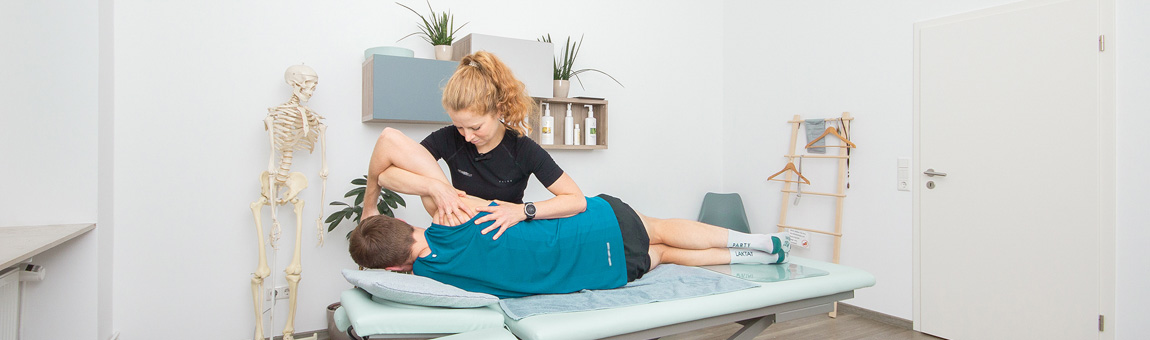
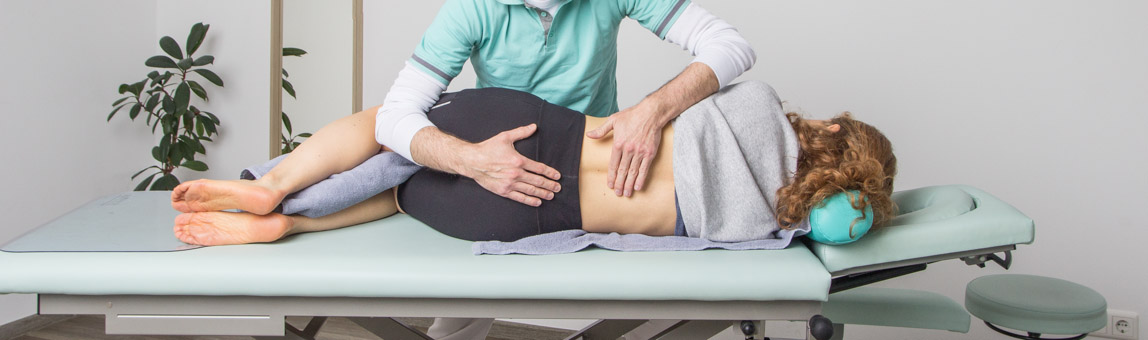
Manual therapy (MT) at Physiotherapy VITALITY in Frankfurt city centre
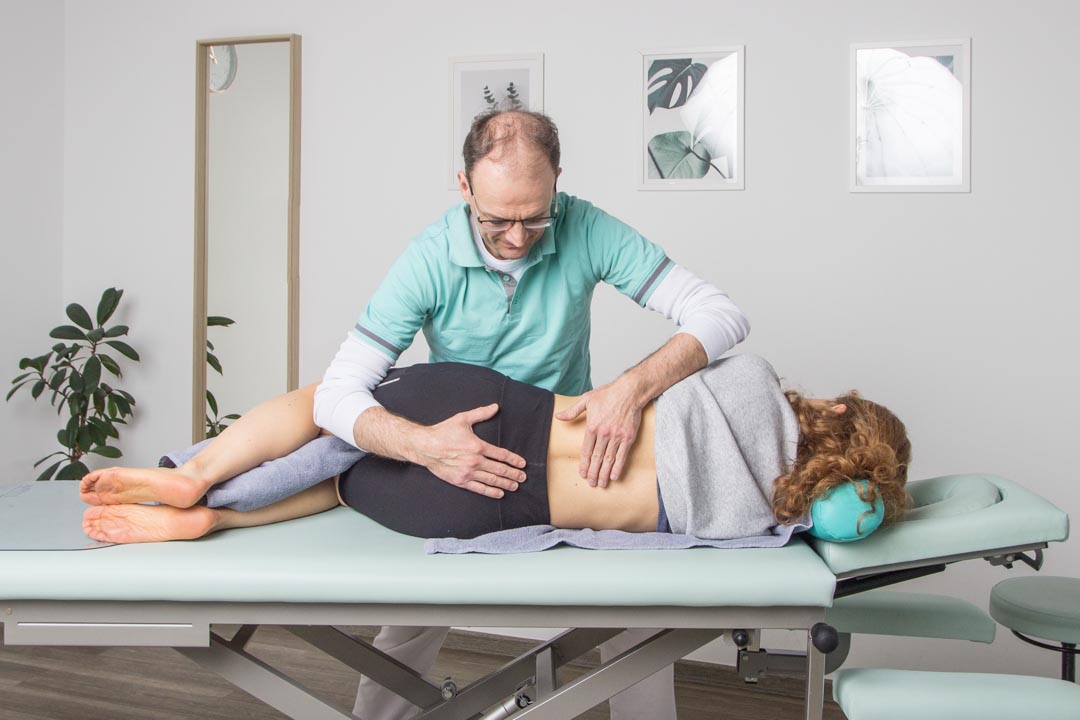
Manual therapy (MT) is a specialised physiotherapy treatment using targeted techniques on joints, muscles and soft tissues. It aims to influence pain, improve mobility and restore function. At VITALITY – Practice for Physiotherapy and Training in Frankfurt city centre, we combine manual therapy with active exercises where appropriate, helping the benefits become lasting rather than merely short-lived.
What is manual therapy?
Manual therapy is a specialised physiotherapy method in which therapists use targeted hands-on techniques to treat restricted movement and reduce pain. It often focuses on improving joint function, relieving overloaded structures and normalising movement patterns.
Typical elements of manual therapy (depending on prescription and assessment):
- Joint-specific techniques to improve mobility
- Soft tissue techniques (muscles and fascia) to regulate tension
- Treatment of functional limitations (e.g. a feeling of blockage or protective muscle tension)
- Pain relief through appropriately dosed, targeted mobilisation
- Combination with active exercises to stabilise results
When is manual therapy useful?
MT is often particularly helpful when mobility is restricted or pain inhibits movement.
Manual therapy is commonly used for:
- Restricted movement and a feeling of blockage (e.g. in the spine, thoracic spine or cervical spine)
- Joint symptoms (e.g. shoulder, knee, hip and ankle)
- Pain caused by inappropriate loading or overload (e.g. recurrent symptoms in everyday life or sport)
- Limitations following injury or surgery (e.g. reduced mobility)
- TMJ conditions / CMD (depending on indication and prescription)
Why MT is often combined with active therapy (Exercise therapy)
Manual therapy can offer noticeable relief when structures need unloading or movement needs restoring. Results are often more lasting when actively stabilised afterwards, for example through strengthening, coordination and functional training. Depending on your assessment, we therefore combine MT with active elements to improve your long-term load tolerance.
How we conduct a manual therapy session
We begin with an assessment and clarification of your goals, including mobility, pain behaviour and everyday function. We then use targeted manual techniques to treat relevant structures and teach appropriate movements and exercises to help you apply the results in daily life. Treatment is adapted over time so that you gradually gain greater freedom of movement, control and load tolerance.
Prescription, duration & appointments
Manual therapy (MT) is prescribed by a doctor, under statutory or private insurance depending on your cover and prescription. If you are unsure which prescription is appropriate, we are happy to help you understand the options.
The length of treatment depends on your doctor's prescription. We organise appointments so that therapeutic treatment, brief discussions, necessary documentation and clear instructions, such as exercises, can take place within a well-structured appointment – allowing you to focus on your therapy without rushing.
Depending on your symptoms, it may be useful for your doctor also to prescribe Exercise therapy (KG) . A session can then combine the two, for example 20 minutes of MT and 20 minutes of KG, so that targeted work on mobility and pain is followed by active exercises to stabilise the results. Overall duration depends, among other things, on the number of prescribed sessions and the goals we agree together.
Manual therapy (MT) FAQ
What is the difference between manual therapy (MT) and exercise therapy (KG)?
MT is more passive: targeted hands-on techniques are used to influence mobility and pain. KG is more active: you train function, stability and load tolerance. A combination is often ideal: MT creates mobility and KG helps maintain it over time.
Is manual therapy the same as massage?
No. Massage is a form of soft tissue treatment. Manual therapy also includes joint-specific techniques and requires a specialist physiotherapy qualification. Soft tissue techniques may form part of treatment depending on your assessment, but MT has a considerably broader scope.
Who is manual therapy suitable for?
It is suitable for many patients with restricted movement, joint symptoms or pain that inhibits movement. We determine whether MT is appropriate based on your assessment and goals.
What should I bring to my appointment?
Your original prescription (sent by email in advance), a towel, comfortable clothing and any relevant previous findings.
👉Back to the service overview
👉Request an appointment: contact form
VITALITY – Practice for Physiotherapy in Frankfurt city centre
Schillerstraße 30–40, 60313 Frankfurt am Main
Tel. 069 15343443